A four-bedroom Canberra home doesn’t automatically need four air conditioners.
Think about how you actually use the house. The living areas might be busy from morning to evening, while the bedrooms only need heating or cooling at night. One bedroom might have become a home office, while the spare room may hardly be used.
Before choosing a system, consider which parts of the house need heating or cooling and when they are being used. Is the living room where the family spends most of its time? Does the home office need its own unit? Is the current heating still performing well through winter?
The Energy People supplies and installs Daikin air conditioning across Canberra, with more than 52,000 heating and cooling installations completed in Canberra homes.
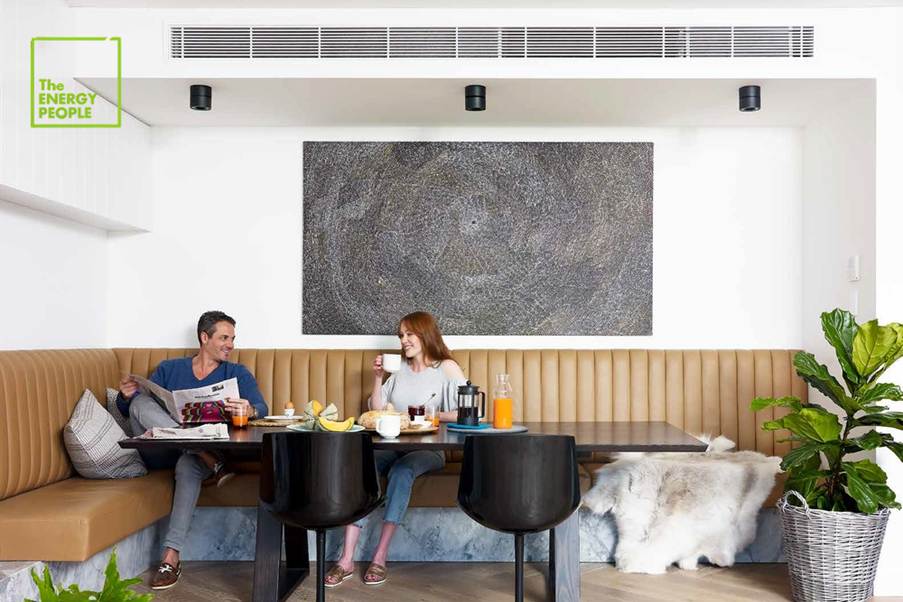
Image alt: Ducted air conditioning in a modern Australian home
Which Daikin system is right for your home?
Start by thinking about which rooms you need to heat or cool, how often you use them and whether you want separate temperature control.
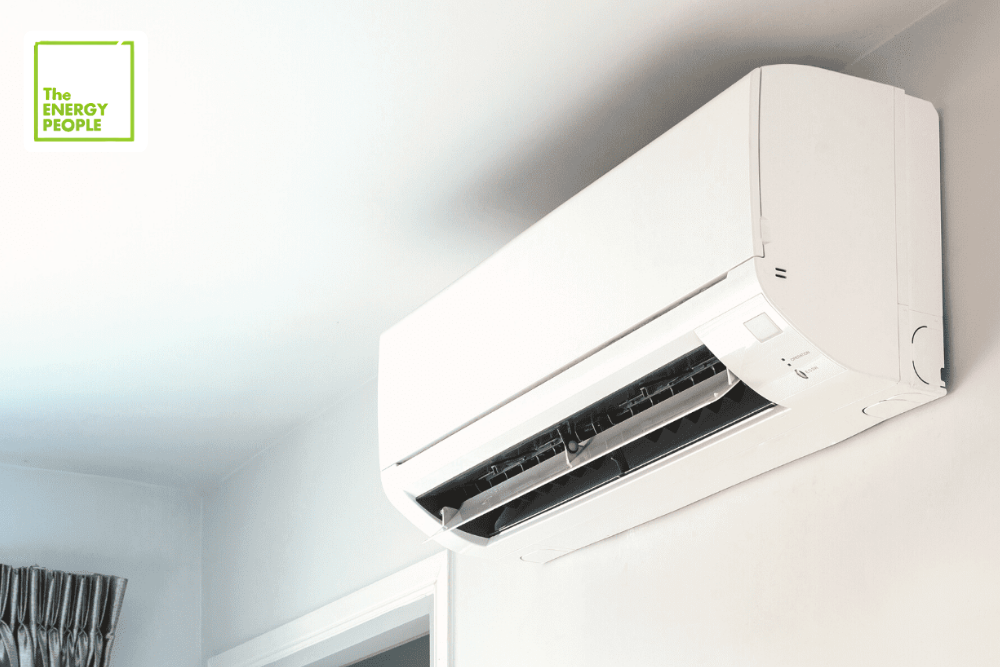
Reverse-cycle split systems
For one room or a defined living area, a reverse-cycle split system keeps things straightforward.
A living room, a bedroom that becomes uncomfortable overnight or a home office can all benefit from this type of setup.
Rather than heating or cooling the whole house, a split system focuses on the room you’re actually using. Installation is also generally less involved than a ducted system, making it a practical option when only one or two areas need attention.
Because the same unit provides both heating and cooling, you can use it throughout the year. That’s particularly useful in Canberra, where summer afternoons can be hot while winter mornings can be very cold.
Multi-split systems
A multi-split system provides air conditioning for several rooms while using a shared outdoor unit.
For example, indoor units could be installed in the living room, main bedroom and home office, while an occasionally used spare bedroom is left without one.
Each indoor unit can be controlled independently, so the temperature doesn’t have to be the same throughout the house. This gives you greater flexibility when different rooms are being used at different times.
Ducted air conditioning
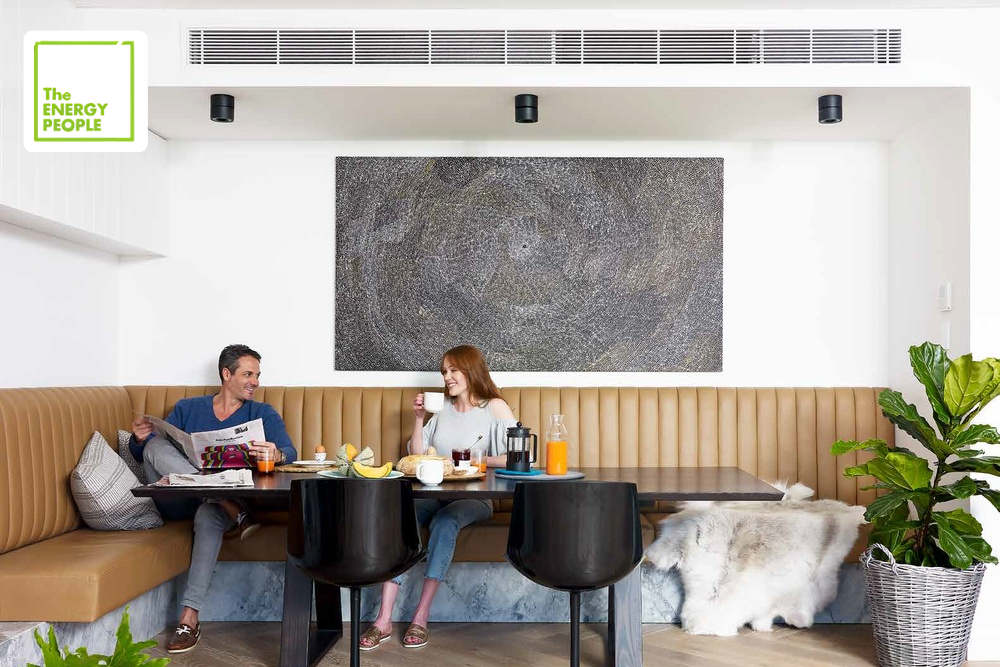
Ducted air conditioning distributes heated or cooled air through concealed ductwork and ceiling outlets, keeping the main equipment out of sight.
For homeowners who want heating and cooling across multiple parts of the house, ducted air conditioning provides coverage throughout the property. Zoning adds another level of control, allowing different parts of the property to operate according to how they’re being used.
A ducted installation needs careful planning, particularly in established Canberra homes. Roof space, ceiling access, existing structures and potential ductwork routes all need to be assessed before installation begins.
Ceiling outlet placement matters too. In larger living rooms and open-plan areas, positioning the outlets correctly can help distribute conditioned air more evenly throughout the space.
Do you need to replace your existing heating?
Not necessarily.
If your ducted gas heating is still working well, there’s no automatic need to replace it simply because you want cooling for summer.
The Energy People offers add-on cooling for homes with ducted gas heating already in place. When the current heating system and ductwork are suitable, refrigerated cooling can be added while the heating equipment remains in use.
The condition of the heating unit, ductwork and controls will help determine which approach makes sense for the property.
How do you choose the right air conditioner size?
Choosing the correct capacity involves more than measuring the floor area.
Take two bedrooms that are both 20 square metres. One might have large west-facing windows and receive strong afternoon sun, while the other stays shaded for much of the day. Although they are the same size, their heating and cooling requirements can be quite different.
Several factors affect the required capacity, including:
- Ceiling height
- Insulation
- Window size and glazing
- Room orientation
- Sun exposure
- How rooms connect to each other
- How each space is used
- The size and layout of open-plan areas
Open-plan spaces need particular attention. A kitchen, dining area and living room may function as one connected space, but simply adding their floor areas together doesn’t necessarily give an accurate picture of the heating or cooling load.
Large windows can bring in considerable heat during a sunny afternoon, while poor insulation can make it harder to maintain a comfortable indoor temperature.
A site assessment looks at these factors together, giving you a better idea of the capacity your home actually needs.
Replacing an older air conditioner
Your household may have changed since the original system was installed. Perhaps a spare bedroom is now a home office, the living area has been renovated, or one part of the house has never been as comfortable as the rest.
For a ducted replacement, the ductwork and insulation should be checked along with the ceiling outlets, electrical connections and roof access. Some components may be suitable for continued use, while others may need modification or replacement.
It is also worth explaining any problems you’ve experienced with the old system. If one bedroom was consistently warmer, the living area struggled to reach a comfortable temperature or certain zones were rarely used, those details can help shape the design of the replacement.
What should you look for in a Daikin air conditioning quote?
The equipment is only part of the overall cost.
Installation requirements vary from property to property. A straightforward split-system installation may involve relatively little work, while a ducted system in a home with limited roof access could require additional labour or modifications.
Before comparing quotes, check exactly what is included. Depending on the project, this may cover:
- Indoor and outdoor unit installation
- Electrical work
- Refrigerant pipework
- Ductwork and ceiling outlets
- Zoning for ducted systems
- Removal of existing equipment
- Modifications to existing ductwork
- Additional work related to property access or the home’s layout
Two quotes can specify similar Daikin equipment and still have different prices because the installation requirements are different.
A detailed quote should make it clear what you’re paying for, which equipment will remain in place and whether any additional work has been allowed for.
Final Thoughts
Choosing the right air conditioning system is about more than the number of bedrooms or the size of the house. The way you use each room, your existing heating and the practical requirements of the installation all need to be considered.
The Energy People can assess your home and explain the Daikin options available, whether you’re considering a split, multi-split, ducted system or add-on cooling.
Frequently asked questions
Can I add cooling to my existing ducted gas heating?
Yes, provided the current setup is suitable. The Energy People can assess the heating system and ductwork to determine whether add-on refrigerated cooling is appropriate.
Is a multi-split system suitable if some rooms are rarely used?
Yes. Each indoor unit can be operated independently, allowing you to condition the rooms you use regularly without installing units throughout the entire house.
What should I tell you before an air conditioning assessment?
It helps to explain which rooms you use most, any areas that are consistently too hot or cold, changes you’ve made to the home and any problems with your existing system.
How do I know what size air conditioner I need?
Capacity depends on more than room size. Windows, insulation, ceiling height, orientation, sun exposure and the relationship between connected spaces all affect the heating and cooling load.